- Press Release
Crucial ocean protection target 265 years off pace as UN nature summit begins

Photos are available in the Greenpeace Media Library
A new report from Greenpeace International reveals that, at the current rate of progress, it could take 265 years to fully protect 30 per cent of the ocean, which scientists say is the minimum required to give it a chance at recovery. It exposes that in 2025, industrial fishing vessels on the Atlantic high seas spent a shocking estimated 1.6 million hours fishing in total – equivalent to over 180 years or one million football matches.
The report, Well Connected, argues that creating networks of sanctuaries in the high seas would help save the target and, importantly, it would protect key migratory species like whales and turtles.[1] It finds that a connected network of ocean sanctuaries in the Atlantic high seas would protect vital migration routes for vulnerable leatherback turtles, shielding over 35 per cent of danger zones where they are at risk of being killed by industrial fishing activity. It would safeguard almost half (44%) of humpback whale routes from ship strikes.
This new report makes a case for fully protected marine sanctuaries, which would stop industrial fishing and reduce shipping traffic from within their boundaries. Many current marine protected areas still allow for destructive industrial fishing – which renders them useless at protecting biodiversity.
Greenpeace UK’s senior ocean campaigner, Chris Thorne, said:
“Governments simply haven’t been protecting our precious ocean with the urgency required and delegates meeting in Armenia need big, bold solutions to put them on track. Our proposed network of Atlantic sanctuaries is exactly the sort of solution governments need to build on quickly to have any hope of tackling our ocean and climate crises, which is vital for national security. The UK government should back a network of ocean sanctuaries, from our shores right across the Atlantic, and use the UK’s diplomatic weight to champion them on the global stage. When we leave it alone, and restrict destructive activities, our ocean can bounce back, so there is hope that it will teem with awe-inspiring nature again if we defend it.”
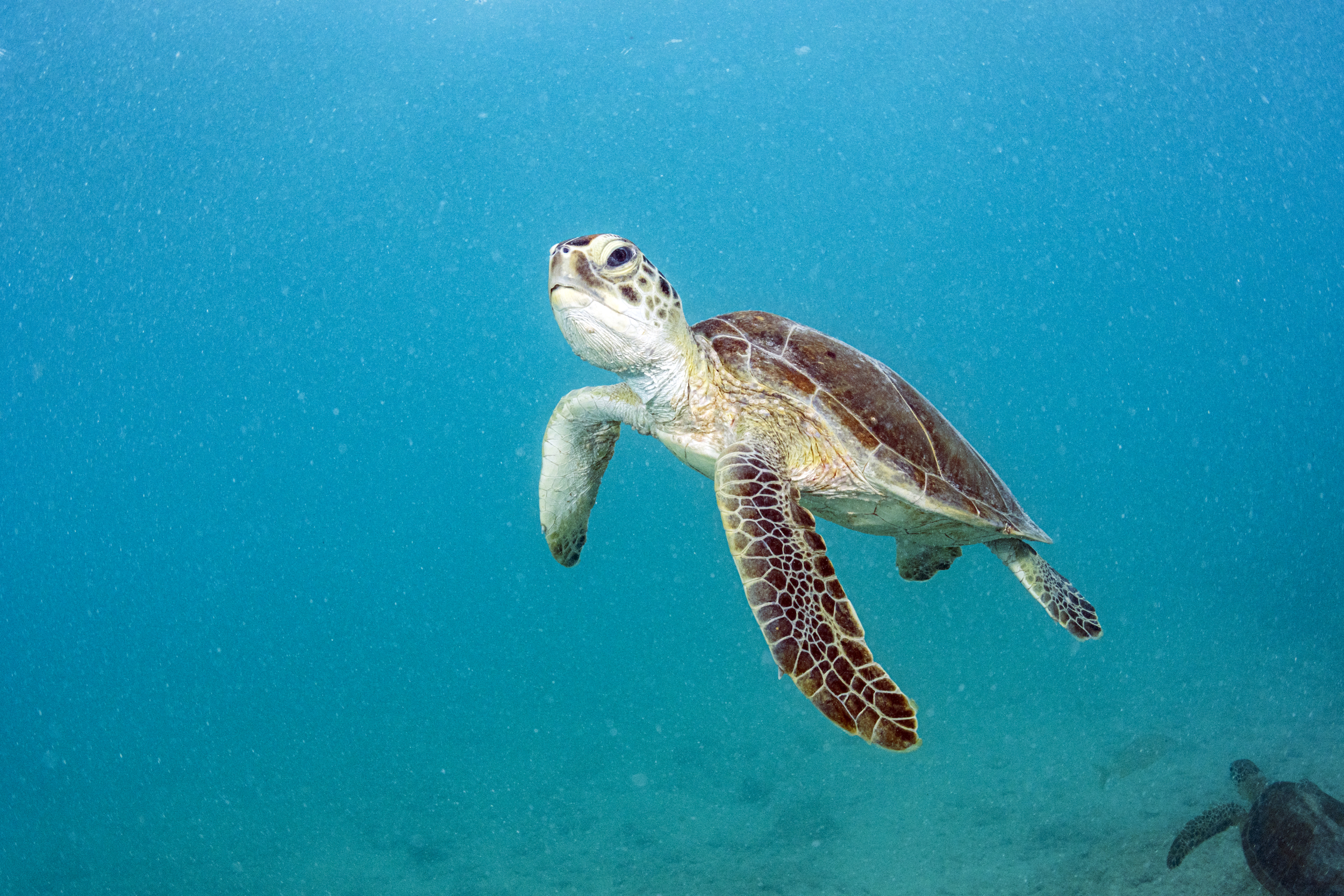
Leatherback turtles are one of the most threatened marine vertebrates on the planet, classified as vulnerable on the IUCN red list [2]. Currently, there are no fully or highly protected areas in the Atlantic High Seas, leaving nowhere free from the threat of industrial fishing.
Brendan Godley, from the Wilkes Atlantic Leatherback Turtle Alliance at The University of Exeter, said:
“Leatherback turtles undertake remarkable migrations across the Atlantic, moving between tropical nesting beaches and the open ocean as far north as Canada. Conserving such wide-ranging species requires protection at a scale that matches the ecosystems on which they depend. We are therefore pleased to support this Greenpeace report, which highlights the importance of safeguarding connected ocean habitats across the entire Atlantic. By demonstrating the value of coherent networks of protected areas, the report provides a compelling case for the establishment of large-scale ocean sanctuaries that can help maintain ecological connectivity, protect biodiversity and provide safer passage for migratory species such as the leatherback.”
In the report, Greenpeace International identifies 17 sites that should form a network of fully protected ocean sanctuaries under the Global Ocean Treaty, covering locations where migrating species face the greatest threats. These sites include the Sargasso Sea where the European eel spawns, the Canary-Guinea Current Convergence Zone which supports vital fish stocks along West Africa’s coastline and the Walvis Ridge, a stepping stone for humpback whales. The areas incorporate existing marine protected areas (MPAs) – which must be upgraded to be fully protected – some sites already being explored by governments for protection and a number of new sites to form a network covering over 31 per cent of the Atlantic high seas. If implemented, this would more than double the total area of the world’s ocean that is fully protected from industrial fishing.
Greenpeace UK is calling for the UK government to work with allies to advance ambitious ocean protection plans during the UN Biodiversity conference. Foreign Secretary Ed Miliband then has an opportunity to reclaim the UK’s role as a global ocean leader by attending the first Oceans COP next year and announcing a bold plan for protecting the Atlantic Ocean.
Sarah Champion MP, chair of the All Party Parliamentary Group for the Ocean, said:
“This Greenpeace report adds to the mounting evidence that industrial scale fishing vessels pose a grave threat to our ocean, with over a million hours of fishing in just the Atlantic last year. However, if we take a joined-up approach to local sustainable fishing, together with marine conservation, both can thrive.
“Huge networks of ocean sanctuaries are our best chance to support the UK and international commitment to protect 30% of our ocean by 2030, starting with the Atlantic on our own shores. I welcome the progress our Government has made, but ocean protection is still happening too slowly. I support this report’s recommendations for the UK to work at pace with our international allies and deliver fully protected sanctuaries right across the Atlantic, including the Sargasso Sea.”
Ends
The full Well Connected report is available on the Greenpeace UK website.
Photos are available in the Greenpeace Media Library.
Interviews are available on request.
Contacts:
The Greenpeace UK press office, press.uk@greenpeace.org, 0207 865 8255 (diverts to mobiles).
Notes to Editors:
[2] Leatherback turtle listed as vulnerable on IUCN red list
[3] The report analysed Global Fishing Watch satellite tracking information for the Atlantic high seas fishing fleet, revealing that in 2025, in total they spent a shocking 1.6 million hours fishing – which is equivalent to over 180 years worth of fishing in just one year.
[4] Marine Conservation Institute MPA Atlas https://mpatlas.org/mpaguide/
- The report overlays leatherback turtle and humpback whale Atlantic migration routes, against areas of high bycatch risk and high ship strike risk respectively, to identify migratory ‘danger zones’ for these species. It then identifies 17 sanctuary sites with strong potential to reduce the threats faced by migratory species. 1 site includes all of the existing Atlantic high seas protected areas, which need to be upgraded to full protection. 5 sites; Sargasso Sea, Canary-Guinea Convergence Zone, Banana Hole, Walvis Ridge and Atlantic Equatorial Fracture Zone are already being explored for protection by governments, scientists and NGOs. Of the remaining 11 newly identified sites, eight are already categorised as Ecologically or Biologically Significant Marine Areas (EBSAs) under the UN Convention on Biological Diversity
- This report uses the term ‘sanctuary’ to align with the standards of ‘fully’ or ‘highly’ protected MPAs as defined by the International Union for Conservation of Nature (IUCN). Its recommendations are also aligned with a growing global consensus that strong biodiversity outcomes depend on banning industrial activity in protected areas and substantially reducing direct risks of mortality for marine life, such as bycatch from fishing and collisions with shipping.
- Protecting migratory species like whales and turtles is vital for the future of a healthy ocean. They connect different ecosystems, and their movement patterns reveal key biodiversity hotspots which are currently unprotected from destructive human activity. Analysing these animals provides vital information, identifying locations where sanctuaries can have the strongest impact in protecting marine ecosystems. Creating big protected sanctuary networks will protect vital feeding and breeding grounds not only for whales and turtles, but for the over 800 species that migrate through the ocean. Their survival depends on their safety across entire migration pathways, rather than just in single isolated pockets.
- To calculate the danger zones, Greenpeace analysis looked at tracking data for humpbacks and leatherbacks, alongside commercial fishing and shipping data to map the areas of highest risk for species.
- Just 3.5% of the world’s ocean is fully or highly protected – meaning there’s a ‘marine protection gap’ of 26.5% that needs closing to reach 30%. In the 34 years since the Rio Earth Summit in 1992, when countries initially agreed to establish networks of MPAs to safeguard marine biodiversity, fully and highly protected MPA coverage of the global ocean has increased by just 0.1% per year. At this rate, achieving the remaining 26.5% needed to fully protect 30% of the ocean would take the international community an estimated 265 years.
- This new sanctuary network would cover 31% of the Atlantic high seas and protect over 6% of the global High Seas and approximately 4% of the world’s ocean. This more than doubles the current coverage of fully or highly protected ocean areas, from 3.5% to 7.5%.